
Does Sim Racing Improve Real-Life Driving Performance? (Real Track Results from Croft - Part 2)
17 April 2026 - Stuart

The short answer still stands: yes, sim racing improves real-world performance.
But after the first actual race weekend, the picture is a bit more nuanced.
This is Part 2 of a real-world experiment following a return to competitive motorsport - and exploring how sim racing translates to performance on track.
< if you missed Part 1 >
The Journey Evolves - April 2026
Because while the simulator helped, it didn’t deliver the step-change in performance we might have hoped for. And that’s where things get interesting.
From Testing Confidence to Race Reality
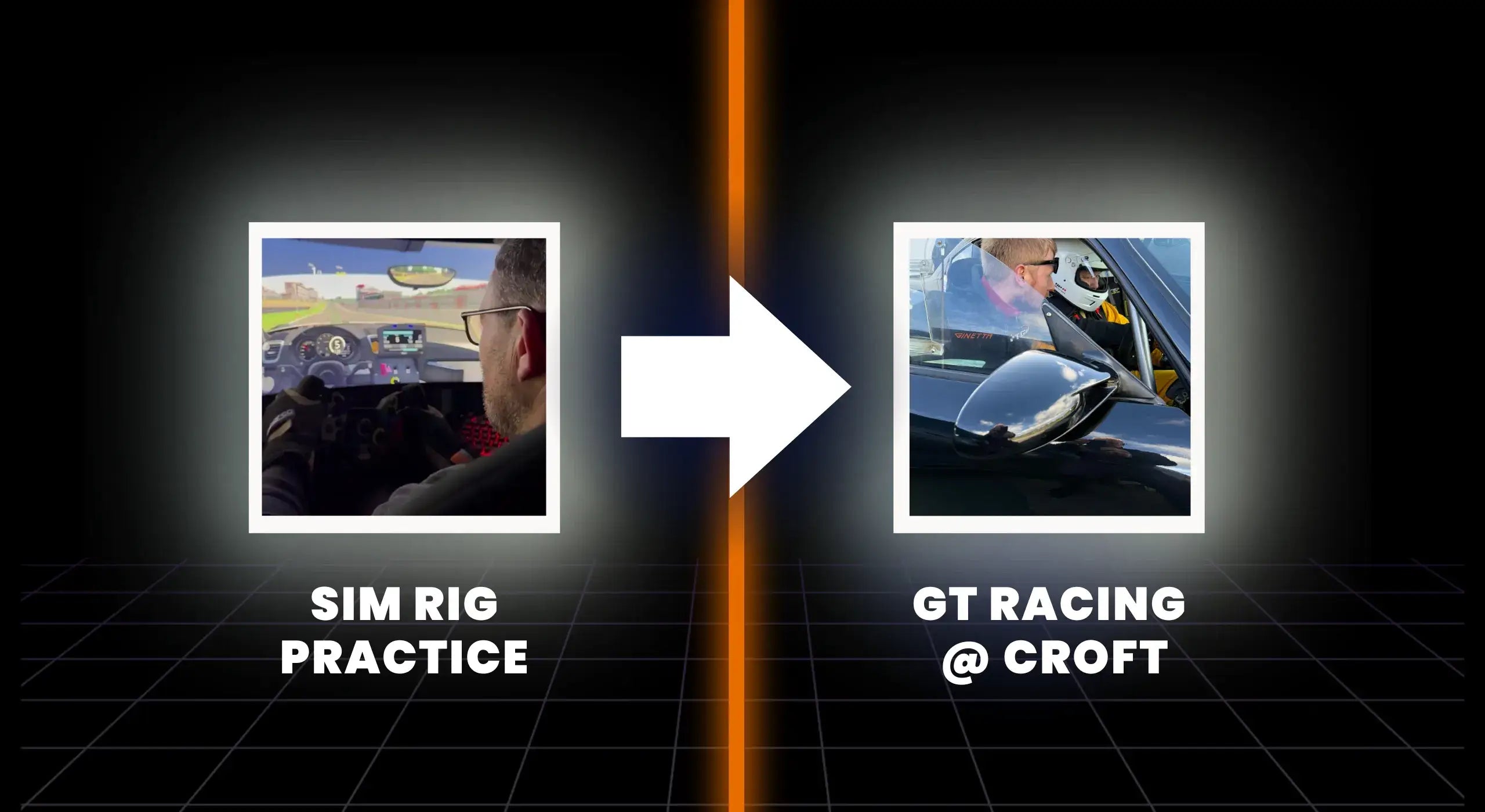
In testing at Croft, the signs were promising. The circuit felt familiar straight away, and the groundwork from the simulator was clear. But race weekends are a different environment entirely.
More pressure, a LOT more. Less track time. Higher consequences. And these shifts change everything. What feels comfortable in testing suddenly becomes more demanding when it counts.
The Croft Race Weekend – The Honest Result
Let’s be clear about where we are. We’re not at the front yet.
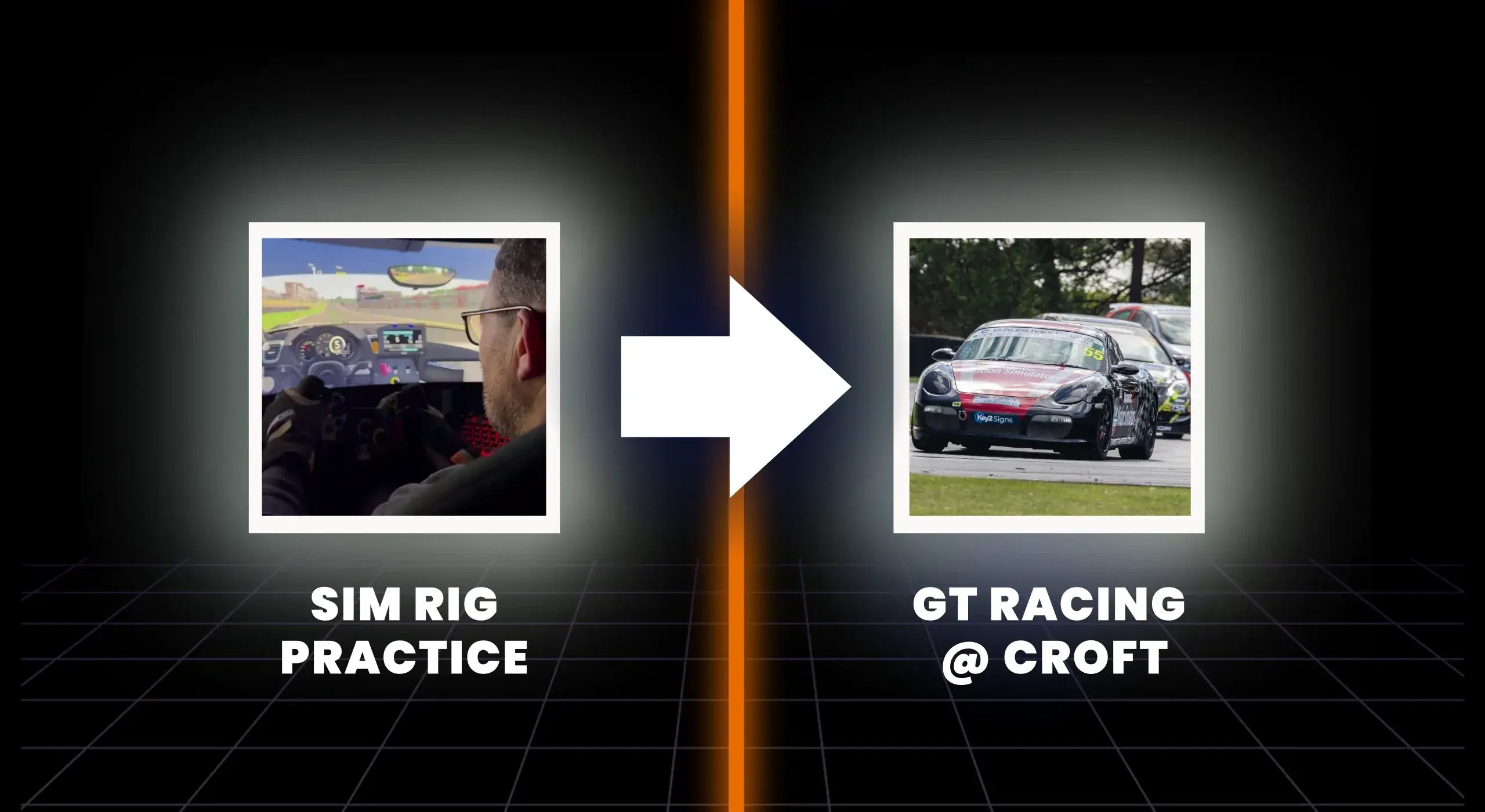
In the 3 races we competed in, we finished near the back - and more critically about four seconds per lap off the time we should be competing at, and where we really wanted to be.
That’s the reality. Not disastrous, but not where we hoped.
And while the simulator gave us a head start in some areas, it didn’t bridge that gap on its own.
Where the Simulator Helped
The benefits from sim preparation were still very real. The DX2 Ultra sim motion platform lets you feel the acceleration, braking, kerbs and terrain. Also, track familiarity was there from the start. I wasn’t learning the layout, which meant I could focus on driving rather than figuring other things out.
That allowed for:
- Cleaner early laps
- Better session productivity
- Faster initial confidence
Mentally, everything felt more under control. The circuit wasn’t new, and that reduced the cognitive load in the car.
But here’s the key point: that advantage gets you up to speed. It doesn’t automatically make you competitive.
Where the gap really is
The biggest takeaway from the weekend is understanding why that four-second per lap gap exists. And it comes down to three critical areas:

Heavy Braking Zones
This is the biggest one for me, braking early, coasting into the apex and not using track limits as effectively as I should be.
In the simulator, you can practice braking points—but translating that into full confidence in the real car is another step entirely.
Right now, I’m leaving time on the table by not attacking the big braking zones hard enough. That last 5/10% - the part where you’re really committing - is still missing.
High-Speed Corner Commitment
Carrying speed through faster corners is another area where the gap shows.
In the sim, you build an idea of what’s possible.
In reality, committing to that speed—feeling the grip, trusting the car—takes more time. That confidence isn’t fully there yet, and it’s costing lap time.
Race Craft
This is where the difference between testing and racing really hits. Driving off- line, managing traffic, setting up overtakes - these are skills that only truly develop in real race situations.
The sim helps, but the consequences in real life change how you approach everything. And that’s something I’m still rebuilding.


Croft Racing Circuit, April 2026
Simscapers: Stephen & Stuart

Expectation vs Reality
If I’m honest, there’s a level of frustration. After the test day, it felt like there might be a bigger jump in performance going into the race weekend. That didn’t quite materialise. But that’s not a failure of the simulator. It’s a reminder of what it can - and can’t - do.
The sim accelerates learning. It doesn’t replace experience. And right now, I’m in that phase of converting knowledge into execution. That takes time.
The Key Takeaway – The Sim Is a Tool, Not a Shortcut
What this weekend really showed is that simulator training is incredibly valuable - especially with the feedback of the DX2 Ultra motion platform - but only as part of the bigger picture. It gives you:
- a head start
- better preparation
- more efficient track time
But the final performance—the last few seconds—comes from:
- confidence under braking
- commitment at speed
- real-world race experience
That’s where the work now needs to go.
Looking Ahead – Donington Park
The next round at Donington Park at the end of May is the next step in this process. And the approach is clear.
The simulator will still play a big role - but with:
More Focus
Repeating heavy braking zones until they become instinctive
Building confidence in high-speed sections
Practicing race scenarios, not just hot laps
Developing Mindset
Being more decisive
More committed
More willing to push into that uncomfortable zone where lap time is found
Understanding the Season
Grasping the process
Learning where the limits are
And pushing them, step by step
This Is Part 2 of a Season-Long Sim Racing Experiment
Tracking my return to racing, competing with Stephen in the SP1 class of the Calm All Porsche Trophy
It explores just how powerful simulator training can bewhen applied in the real world. I’ll be sharing the highs, the challenges, the data, and the lessons as they come, with a clear goal: to understand, measure, and push the connection between simulator and reality as far as possible.
< if you missed Part 1 >
So to conclude...The results at Croft might not show it yet. But there’s a lot to take forward.
Stuart T

Discover more about the DX2 Ultra (formerly DX Winner 2)
- This ultra-compact 2DOF motion platform combines advanced Quasi-DD force feedback with smooth ±10° travel and up to 120 Nm of peak torque
- Lets you feel acceleration, braking, kerbs and terrain like never before
Frequently Asked Questions
Does sim racing help real driving?
Yes - it improves reaction time, track knowledge, and car control.
Can a simulator make you faster on track?
Many drivers see measurable improvements after simulator training.
Is a motion simulator worth it for sim racing?
Motion adds realism and can improve spatial awareness and consistency.
More SIM news & offers
-
Does Sim Racing Improve Real-Life Driving Performance? (Real Track Results – Part 2)
The short answer still stands: yes, sim racing improves real-world performance. But after the first actual race weekend, the picture is a bit more ...
-

SimScapers Launches "Partner & Earn" Affiliate Referral Program
SimScapers is excited to announce the launch of our “Partner & Earn” Affiliate Referral Program - a new opportunity for sim racing creators, in...
-
Does Sim Racing Improve Real-Life Driving Performance? (Real Track Results from Croft)
There’s a certain feeling you never quite forget: the anticipation of getting back behind the wheel, the quiet focus before the engine fires, and t...

